Home / Press Room / Opinion
Opinion15 min read
A THRONE BENEATH THE MOUNTAINS OF THE MOON
At two o'clock in the morning on September 12th 1995, a three-year-old boy was carried through the rites of a mock battle at Karuziika palace in Fort Portal. By four he was Omukama of Tooro, one of the youngest reigning monarchs on earth. He could not yet spell his own name.
1995 was a long time ago. For me, it was the tail end of S6 vac, the long break after A-level examinations, and I was getting ready to join university.
A few months earlier I had found my way into what was then Radio Sanyu, which ran out of the Naguru Hill residence of its proprietor, the late Thomas Katto. My position was not clear, but I hung around, waiting for a real chance to prove my worth. Sanyu TV, which was immensely popular, was on the floor above the radio station.
We played music off cassette and vinyl. CDs were only just arriving, and the production studios, where the adverts and jingles were made, still cut their work on reel-to-reel tape.
I was also a freelance features writer and photographer for The New Vision, learning the trade under Barbara Kaija and David Sseppuuya. We used manual cameras, shot on black-and-white film and ran the rolls to the paper's darkroom, where Margaret, who printed the pictures, would cut off the few frames we had used and hand back the rest for the next assignment. Film was money, and a freelance journalist in those years had very little of either.
To a newsroom in 1995, a three-year-old king was a curiosity, a picture for the front page. Few of us thought hard about what it would mean to be that child, or that kingdom, thirty years on.
Now the drums at Karuziika are sounding again. Oyo Nyimba Kabamba Iguru Rukidi IV died in the United States on August 27th, aged 34, after treatment for an aggressive cancer. His father, Olimi III, had died 31 years and one day earlier.
President Yoweri Museveni put it plainly: "How unfair life can be!! He was orphaned while still young and he has died young."
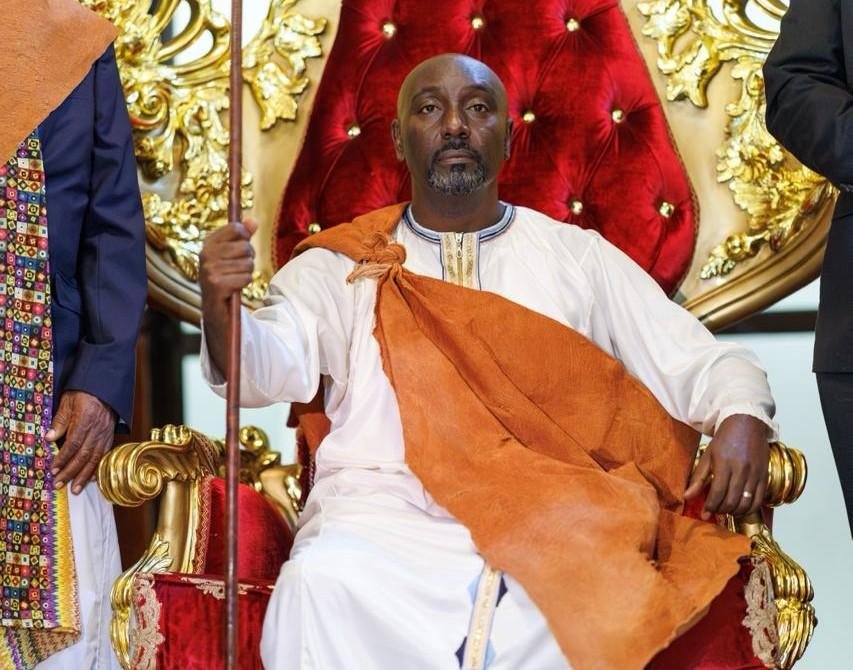
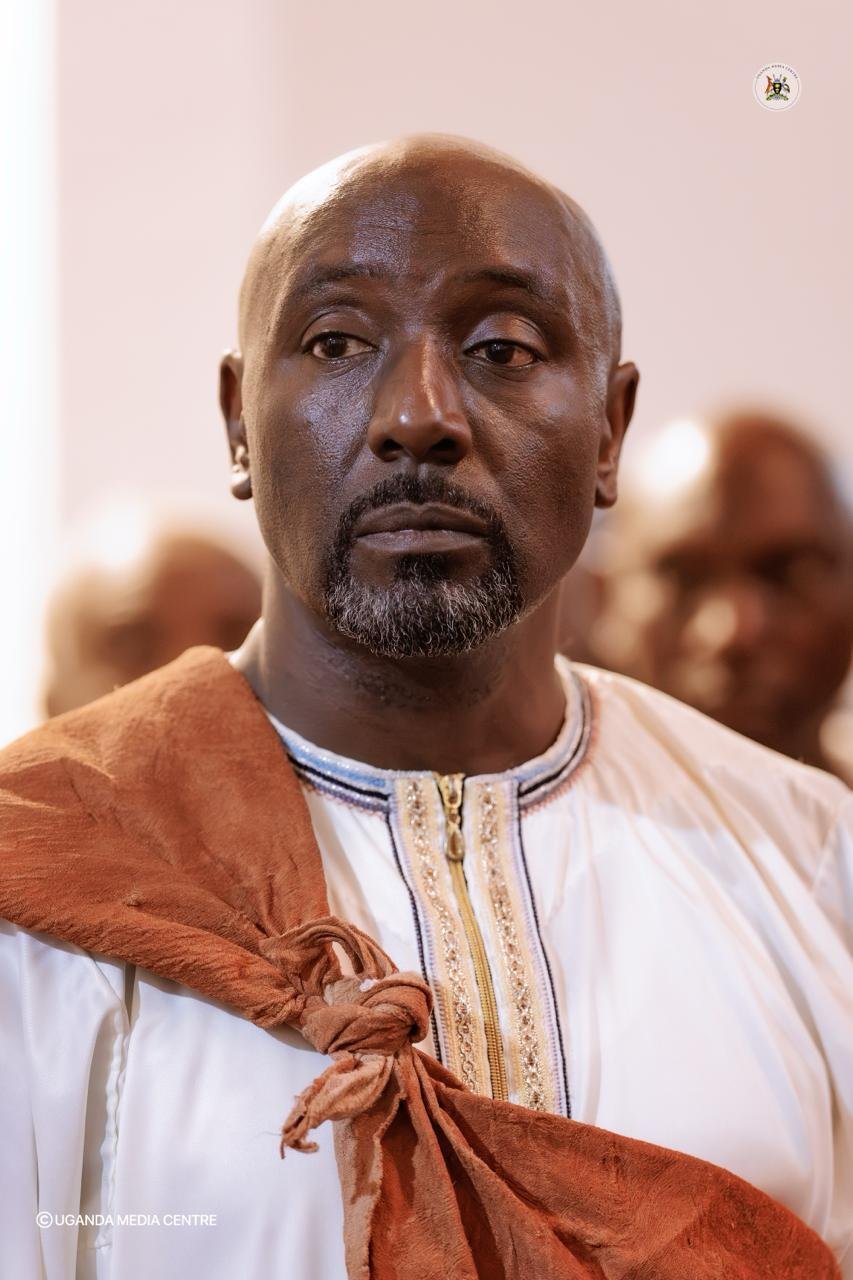
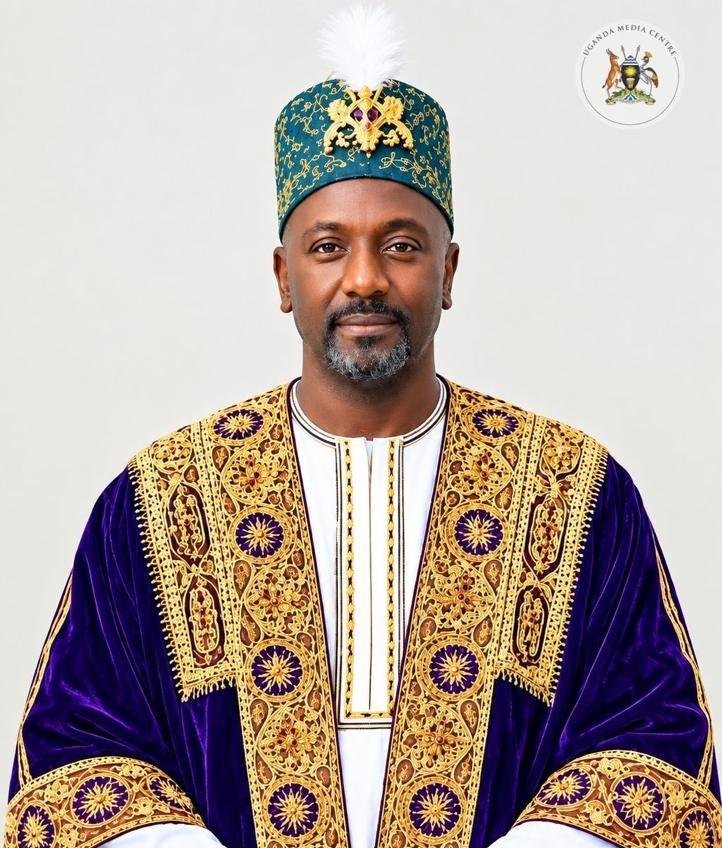
Today Prince Edward Rukidi Kijanangoma, a cousin of the late king and until recently a senior news anchor and editor at the Uganda Broadcasting Corporation, is due to be crowned Edward Rukidi Nyabongo I. He is a grandson of Sir George Rukidi III. Oyo grew up in public, a child on a throne. Edward spent his working life in a studio, telling the country what other people had done that day.
The handover has been messy. As I write, a petition is sitting before the High Court in Fort Portal asking it to stop the coronation. It was filed yesterday by two Batooro and a civil society group, Walezi wa Katiba, who argue that Oyo's will named his son as heir. The late king's mother and sister have contested the succession on the same grounds. The Attorney-General's position, roughly, is that until somebody goes to court, custom decides. Somebody now has.
Plenty of African royal successions run like this. Tooro's deserves close attention, because the next five years in Fort Portal will show whether Uganda's restored kingdoms can get things done for their people.
I think they can. I am less sure they will.
Oyo was mourned more widely than any Ugandan I can remember. I never met him. Many of my friends did, and a good number of them, as you might expect, were women. A young, handsome king was always going to have admirers.
His reign should be judged against where it started. The kingdom had been restored only two years before his father died, and it had goodwill but almost no money. Regents governed in his name: Prince James Mugenyi, his aunt Princess Elizabeth Bagaaya, a former foreign minister, and his mother, Queen Mother Best Kemigisa. President Museveni was also something of a father figure to him. Someone who once sat in on their meetings told me the president was clearly fond of the young king.
One of Tooro's best-known patrons was Libya's former leader, Muammar Qaddafi, who liked to collect African royals for his pan-African schemes. He cast himself as the boy's guardian and paid for work on the palace. When Qaddafi fell in 2011, so did the money.
Oyo grew up in public view. Pre-school in London, Aga Khan Primary and Kampala International School, then a business-management degree from the University of Winchester in 2013. He came home to a kingdom that wanted a modern young man and a traditional king in the same body.
He did some good things. He served as a UNAIDS champion on HIV among young people, when many elders would rather not have discussed it at all. He founded the King Oyo model farm in Kyenjojo to teach commercial agriculture and opened an ICT skills centre for young people in Fort Portal.
In 2022 he became, by the kingdom's account, the first reigning monarch to reach Margherita Peak on Mount Stanley, 5,109 metres up in the Rwenzori, to draw attention to its melting glaciers. He launched campaigns to plant 10 million trees and to clean up the River Mpanga, which runs through Fort Portal.
But thirty-one years is long enough to build institutions, and Tooro's are still thin. The kingdom has long lived on central-government transfers, returned properties and presidential goodwill, not on money it raises itself. The royal family quarrelled in public; in 2015 the new king's own brother, Prince David Kijanangoma, openly challenged Oyo. Much of what was announced in Oyo's name, a museum, a stadium, a cancer and HIV research hospital, never left the drawing board. It is a struggle most African kingdoms know well. Closing that gap is the new Omukama's first job.
A kingdom that keeps coming back
Tooro has had to fight for its existence from the beginning. It started around 1830 as a breakaway, when Kaboyo Olimi I, eldest son of Bunyoro's Omukama Nyamutukura Kyebambe III, took the south-western provinces for himself. Bunyoro never accepted the loss. In 1876 Kabalega, the toughest of its kings, took Tooro back by force.
The British returned it. In 1891 Captain Frederick Lugard, marching west from Buganda, installed the exiled prince Kasagama as Omukama, partly as a buffer against Kabalega. A fort followed, named after the diplomat Sir Gerald Portal, and the town grew up around it. The Toro Agreement of 1900 set the terms: the crown was safe as long as it served the British empire. From the start, Tooro's throne survived by lining up behind someone stronger. That habit has lasted.
Independence tested the arrangement. Sir George Rukidi III reigned from 1928 to 1965, long enough to see the colonial order at its height and at its end. His later years were overshadowed by the Rwenzururu uprising of the Bakonzo and Bamba, who refused to be ruled from Fort Portal. In 1967 Milton Obote's republican constitution abolished all of Uganda's kingdoms, and Olimi III became a king with nothing to reign over. His sister, Princess Elizabeth Bagaaya, became a barrister, a model and, for a few months, Idi Amin's foreign minister. Those were strange years.
President Museveni's government restored the cultural kingdoms in 1993, and Article 246 of the 1995 constitution entrenched them on strict terms: no partisan politics and no administrative power. In 2008 the state recognised the Obusinga bwa Rwenzururu as a kingdom of its own, completing a split the uprising had started half a century before.
So the man crowned today inherits a smaller Tooro than his grandfather ruled, with less formal power and more neighbours who remember old grievances. What he has that his grandfather did not is a throne protected by the constitution.
Getting here has not been easy. The confusion started on the night Oyo died, when Tooro's prime minister, Calvin Armstrong Rwomiire Akiiki, announced that the king "leaves behind a Prince as his heir, whose identity will be formally revealed at the appropriate time." Most people took that to mean a son. The Queen Mother and the late king's sister, Princess Ruth Komuntale, later said as much, pointing to a young boy living in Texas and to a will under which a son should succeed.
The Babiito royal clan saw it differently. Its 21-member succession committee first approached Prince George Desmond Kamurasi, who reportedly turned it down, and on September 9th settled on Edward Kijanangoma; one account puts the vote at 19 of 21. The Rukurato, the kingdom's supreme council, endorsed him on September 15th. The clan's case is simple. Succession runs through recognised lines and recognised clans, and a will does not override the Babiito's own procedures.
The government has changed its mind more than once. Oyo was buried on September 12th, 31 years to the day after his coronation, with the question still open. The Attorney-General, Sam Mayanja, first advised the president that the king's will of September 2022 "provides clear guidance": a recognised biological son should inherit, and failing that, a named alternate, Prince Komwiswa Yoweri.
Norbert Mao, the Minister of Justice and Constitutional Affairs, warned that no king would be gazetted while a dispute stood. Then, with no case yet filed in court, the Attorney-General said the kingdom could go ahead, and Mary Kuteesa, the minister responsible for culture, announced that "Tooro has a new king". Gazetting under Article 246 and the 2011 Institution of Traditional or Cultural Leaders Act is to follow.
That is a defensible position. A republic should not be in the business of choosing kings. But it leaves a risk hanging. Section 16 of the 2011 Act sends unresolved disputes to the courts, and yesterday's petition shows that claims made on behalf of a child will not simply go away. Successions across the continent have been reopened long after the coronation. Whatever the judge in Fort Portal decides, a ruling cannot really settle this. The new Omukama can, by reaching out early to the late king's household.
I have seen many video clips of Batooro saying that an adult king is a relief. Tooro has just lived through three decades of a monarchy that began as a regency. Another child on the throne would have meant fifteen more years of regents and courtiers speaking in the crown's name. Edward Nyabongo is married to Rebecca Amoding-Rukidi, a human-resources professional from Teso, and he brings the habits of a newsroom with him.
I have spent most of my own working life behind a microphone. The job teaches you that the audience owes you nothing, and that it will switch off the moment you stop being useful to it. Kings could do worse than learn that.
Africa's surviving monarchies offer Tooro plenty of examples, good and bad.
The best is in Kumasi. When Otumfuo Osei Tutu II became Asantehene in 1999, he brought a business career in London and Toronto to the Golden Stool. His foundation has paid school and university fees for hundreds of thousands of students. He chaired the committee of eminent chiefs that ended the Dagbon succession feud in northern Ghana, which had outlasted several governments, and two former presidents credit him with quiet help in Ghana's dealings with the IMF and the World Bank. He has no army and almost no tax base. What he has is the ability to get people into a room, and he uses it constantly. For a former newsman in Fort Portal, that is the model to study.
The Zulu kingdom shows what happens when the state moves too fast. King Goodwill Zwelithini died in 2021, and President Cyril Ramaphosa recognised his son Misuzulu the following year amid a family fight over wills and houses. In December 2023 the High Court in Pretoria set that recognition aside, finding the president had acted hastily, and ordered an inquiry into the rightful heir. The Zulu case also shows where a throne's weight really lies: in the Ingonyama Trust, which holds around 2.8 million hectares of KwaZulu-Natal. Land gives a king leverage, and it makes him a target.
Kano is a different kind of warning. The state government deposed Emir Muhammadu Sanusi II, a former central-bank governor, in 2020. A new government brought him back in 2024 and deposed his successor, leaving the city with two palaces and competing court orders. When an emir's tenure depends on who runs the state house, the office becomes a party prize. Uganda's constitution keeps cultural leaders out of partisan politics, and Tooro is better off for it.
Closer to home is Mengo. Buganda under Kabaka Ronald Muwenda Mutebi II has spent three decades building a proper administration. Its budget for 2026/27 is Shs409.3bn, a third bigger than last year's, and only a small fraction of it comes from government. Its Emwanyi Terimba campaign has put coffee back on farms across the kingdom. Tooro cannot match Buganda's size or its land. It can copy its habits: a professional civil service, a published budget and one economic cause pursued for years.
Botswana went further than anyone. Seretse Khama, heir to the Bangwato chieftaincy, gave up his claim, founded a party and, as president, folded chiefly authority into one of Africa's best-run republics. Nobody is suggesting that for Tooro. But Khama understood that tradition earns its place by strengthening the state.
The economics of a green kingdom
On my last trip west I visited my friend Andrew Mwenda's home in Kanyandahi, outside Fort Portal. Andrew is very proud of his village and calls it the most beautiful place in the world. I could see why. Fort Portal, and Tooro in general, has a quietly seductive charm. Even the tone in which Rutooro is spoken relaxes me. Having spent so many years abroad, I am only now rediscovering my own country, and Fort Portal is where I hope one day to buy a place.
Beauty is also an economic asset, and Tooro has more of it than its royal finances suggest. The sub-region, six districts and Fort Portal City, had 2.15m people at the 2024 census, up from 1.59m a decade earlier. It is a young, fast-growing market on some of the most fertile land in East Africa.
The land produces tea on the Fort Portal plateau and the eastern slopes of the Rwenzori, arabica coffee in Kabarole, and milk for a busy dairy trade. Most of it leaves the region unprocessed. Factories, brands and cold chains would keep more of the money at home, and championing them is exactly the sort of work a kingdom can do without straying into politics.
The landscape is worth even more. Uganda earned about UGX 5.8trn (roughly $1.6bn) from 1.6m visitors in 2025, and tourism now accounts for close to 6% of GDP and some 876,000 jobs. Tooro holds a large share of the country's best product: Kibale National Park and its roughly 1,450 chimpanzees, the crater lakes, and the Rwenzori, which Ptolemy called the Mountains of the Moon. Fort Portal, a city since 2020, calls itself Uganda's tourism city. Yet most visitors still drive through on the way to somewhere else. Culture could keep them longer. The Empaako naming system, inscribed by UNESCO for urgent safeguarding, belongs to this region, and no tourism board could invent a coronation.
The glaciers Oyo climbed to publicise are going. Project Pressure found that the Stanley Plateau glacier lost nearly 30% of its surface between 2020 and 2024, and the UN expects Africa's tropical glaciers to be gone by 2050. About 5m people depend on rivers fed by the Rwenzori. A growing population is pushing into forest edges and wetlands, and the Mpanga clean-up exists because the river through the capital needed one.
The national calendar helps. Uganda co-hosts the Africa Cup of Nations in 2027, and some of those fans will want to see more than a stadium. As the oil industry gets going in neighbouring Bunyoro, new roads and the international airport at Kabaale bring Fort Portal closer to the rest of the world. Whether Tooro organises itself to catch that traffic is up to Tooro.
The new Omukama has one advantage his cousin never had. He takes the throne as an adult, with no regents between him and his people. He should spend his first year setting a tone and leave the monuments for later.
He should begin at home. The Queen Mother, Princess Komuntale and Princess Bagaaya need to hear from him early and in public. And if the late king did leave a son, that child needs a secure and honoured place, wherever he stands in the line. A succession won in committee is settled only when the other side stops contesting it.
Then the books. Mengo publishes a budget; Karuziika should too, and it should build income that does not depend on State House. A kingdom that cannot account for its own shillings will struggle to be trusted with anyone else's.
He should pick one cause and stay with it for a decade. Buganda chose coffee. Tooro could choose the Rwenzori: the tea and dairy on its slopes, the tourism in its forests and the watershed that 5m people drink from. That would also give him reason to work with his neighbours. Rwenzururu, Bunyoro-Kitara and Tooro share the same mountains and rivers, and a long list of grievances. A king who turned some of that into joint projects would be doing for western Uganda what the Asantehene did for Dagbon.
And he should finish Oyo's work before starting his own. The trees, the model farm, the Mpanga clean-up and the youth ICT centre are real. Completing them in the late king's name would honour him more than a museum.
Edward Nyabongo spent years reading the news on UBC. He knows how quickly an audience switches off, and how much work it takes to win it back. That is a useful thing for a king to know. Tooro's crown once rested on conquest, and later on a colonial charter. Today it rests on the constitution. Whether it lasts will depend on whether the people of Tooro find it useful.
Oyo was carried to the throne at three. His cousin walks to it at 56, with a career behind him. Tooro should expect more from him, and he should expect it of himself.